Salvación en CristoSalvation in Christ
Solamente en Cristo hay salvación.Salvation is found in Christ alone.
Hechos 4:11-12Acts 4:11-12

NosotrosAbout
Los valores que guían nuestra casa.The values that guide our house.
Nuestros valoresOur values
Solamente en Cristo hay salvación.Salvation is found in Christ alone.
En CPG cada persona es importante para Dios y, por consiguiente, para la familia de Cristo que es la iglesia.At CPG every person is important to God, and therefore to the family of Christ, which is the church.
Somos un equipo, un cuerpo trabajando unidos bajo una misma visión y propósito.We are a team, one body working together under one vision and purpose.
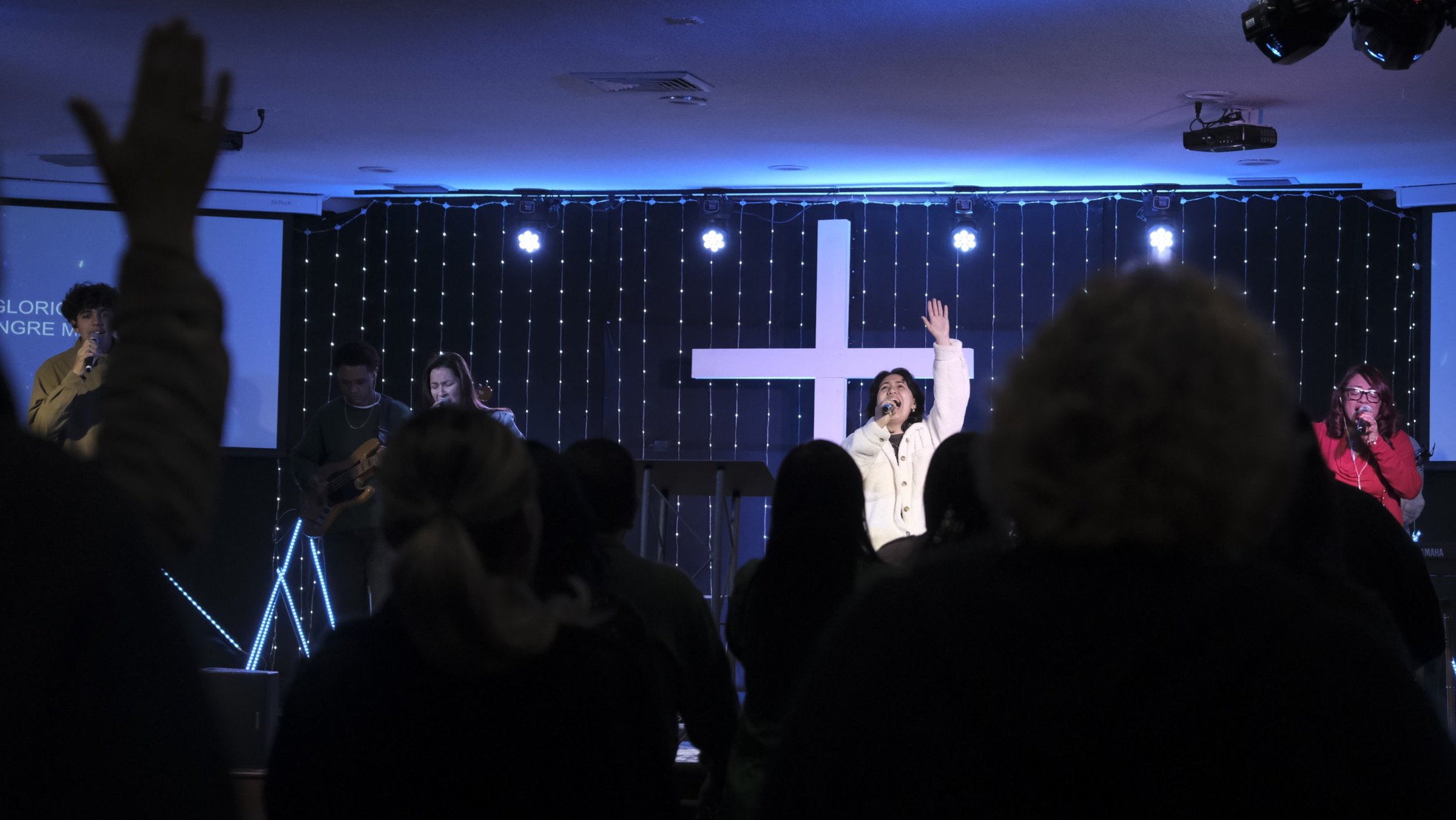
Sin alterar el fundamento de nuestra fe, creemos en presentar a Cristo de diferentes maneras, usando las artes creativas para impactar y transformar vidas.Without changing the foundation of our faith, we believe in presenting Christ in different ways, using the creative arts to impact and transform lives.
En esta casa cada miembro es un ministro que tiene dones y talentos para ser desarrollados para el beneficio de la obra de Dios en la iglesia.In this house every member is a minister, with gifts and talents to be developed for the benefit of God's work in the church.
Cada miembro debe comprometerse a su crecimiento espiritual y rendir cuentas honestamente.Every member should commit to their spiritual growth and be honestly accountable.
Estamos persuadidos de que la vida cristiana es un estilo de vida y, como tal, debe reflejarse en todo lo que hacemos y decimos.We are convinced that the Christian life is a way of life, and as such it should be reflected in everything we do and say.
Nuestro propósitoOur purpose
Alcanzar la mayor cantidad de hombres, mujeres, jóvenes y niños para el Reino de Cristo. Equiparlos para que puedan ser portadores de la gloria de Dios y de esa manera ser una iglesia en continuo crecimiento, tanto física como espiritualmente, haciendo la diferencia en el lugar donde Dios nos ha puesto.To reach as many men, women, youth, and children as possible for the Kingdom of Christ. To equip them to be bearers of God's glory, and so be a church that keeps growing, both in number and in spirit, making a difference wherever God has placed us.
Declaración de feStatement of faith
Toca cada sección para leerla completa.Tap each section to read it in full.
Nuestro Dios eterno, trascendente y todo glorioso, quien existe por siempre como Padre, Hijo y Espíritu Santo, es, por su misma naturaleza, un ser comunicativo (Gn. 1:3; Jn. 1:1; 17:5; Heb. 3:7). Él crea (Gn. 1; Sal. 33:9; 147:18; 148:5; Col. 1:15-17; Heb. 11:3) y también gobierna (Sal. 29; Lam. 3:37-38; Isa. 46:8-11; Col. 1:15-17; Heb. 1:3) a través de sus palabras, y se ha revelado bondadosamente a sí mismo (Deut. 29:29; 1 Sam. 3:21) a la humanidad (Gén. 1:26; 2:15-17) con el fin de tener comunión con nosotros (Hech. 17:24-27). Él se ha revelado a sí mismo por medio de la creación y la providencia de maneras que son claras para todas las personas, no dejando a nadie sin un testimonio de sí mismo (Gén. 3:8-9; Sal. 19:1-6; Os. 2:20; Jn 10:14-15; Hch. 14:17; Rom. 1:19-21). Él también se reveló a sí mismo a través de palabras específicas, para que pudiéramos llegar a un conocimiento más pleno de su carácter y voluntad (Sal. 19:7-11), y aprender lo que es necesario para la salvación y la vida (2Tim. 3:15-17; 2Ped. 1:3-4). A través del recurso del lenguaje humano (Éx.32:16; Heb. 1:1-2), el cual es apropiado e idóneo para la comunicación con aquellos que portan su imagen, Dios ha preservado en la Santa Escritura la única revelación autoritativa y completa para toda la humanidad (Ap. 22:18- 19).Our eternal, transcendent, and all-glorious God, who exists forever as Father, Son, and Holy Spirit, is by His very nature a communicating being (Gen. 1:3; John 1:1; 17:5; Heb. 3:7). He creates (Gen. 1; Ps. 33:9; 147:18; 148:5; Col. 1:15-17; Heb. 11:3) and also governs (Ps. 29; Lam. 3:37-38; Isa. 46:8-11; Col. 1:15-17; Heb. 1:3) by His words, and He has graciously revealed Himself (Deut. 29:29; 1 Sam. 3:21) to humanity (Gen. 1:26; 2:15-17) in order to have fellowship with us (Acts 17:24-27). He has revealed Himself through creation and providence in ways that are clear to all people, leaving no one without a witness of Himself (Gen. 3:8-9; Ps. 19:1-6; Hos. 2:20; John 10:14-15; Acts 14:17; Rom. 1:19-21). He has also revealed Himself through specific words, so that we might come to a fuller knowledge of His character and will (Ps. 19:7-11) and learn what is necessary for salvation and life (2 Tim. 3:15-17; 2 Pet. 1:3-4). Through the means of human language (Exod. 32:16; Heb. 1:1-2), which is fitting and suitable for communicating with those who bear His image, God has preserved in Holy Scripture the only authoritative and complete revelation for all humanity (Rev. 22:18-19).
Creemos y enseñamos que toda Escritura fue inspirada por Dios. Cada autor fue movido y dirigido por el Espíritu Santo (preservando sus personalidades y estilos diferentes) para escribir la Palabra de Dios, de tal forma que quedaron plasmadas libres de error en sus escritos originales (2 Ped. 1:20-21; 2 Tim. 3:16). Su inspiración es considerada verbal, inerrante e infalible y es nuestra única autoridad en materia de fe y práctica; sus verdades son absolutas y eternas (Mt. 24:35). Las Escrituras constituyen el único estándar por el cual debemos medir todo lo que hacemos dentro y fuera de la iglesia (Hch. 20:32; Heb. 4:12). Por esto afirmamos la idea de “Sola Scriptura”, como fue proclamada por los reformadores.We believe and teach that all Scripture is inspired by God. Each author was moved and directed by the Holy Spirit (while preserving their different personalities and styles) to write the Word of God, so that it was recorded without error in the original writings (2 Pet. 1:20-21; 2 Tim. 3:16). Its inspiration is held to be verbal, inerrant, and infallible, and it is our only authority in matters of faith and practice; its truths are absolute and eternal (Matt. 24:35). The Scriptures are the only standard by which we must measure everything we do, inside and outside the church (Acts 20:32; Heb. 4:12). For this reason we affirm “Sola Scriptura,” as proclaimed by the Reformers.
Creemos y enseñamos que la Biblia contiene 66 libros, 39 pertenecen al Antiguo Testamento y 27 al Nuevo Testamento, como ha sido reconocido desde la iglesia primitiva. Antiguo Testamento: Génesis, Éxodo, Levítico, Números, Deuteronomio, Josué, Jueces, Rut, 1 Samuel, 2 Samuel, 1 Reyes, 2 Reyes, 1 Crónicas, 2 Crónicas, Esdras, Nehemías, Ester, Job, Salmos, Proverbios, Eclesiastés, Cantares, Isaías, Jeremías, Lamentaciones, Ezequiel, Daniel, Oseas, Joel, Amós, Abdías, Jonás, Miqueas, Nahúm, Habacuc, Sofonías, Hageo, Zacarías y Malaquías. Nuevo Testamento: Mateo, Marcos, Lucas, Juan, Hechos, Romanos, 1 Corintios, 2 Corintios, Gálatas, Efesios, Filipenses, Colosenses, 1 Tesalonicenses, 2 Tesalonicenses, 1 Timoteo, 2 Timoteo, Tito, Filemón, Hebreos, Santiago, 1 Pedro, 2 Pedro, 1 Juan, 2 Juan, 3 Juan, Judas y Apocalipsis.We believe and teach that the Bible contains 66 books, 39 in the Old Testament and 27 in the New Testament, as has been recognized since the early church. Old Testament: Genesis, Exodus, Leviticus, Numbers, Deuteronomy, Joshua, Judges, Ruth, 1 Samuel, 2 Samuel, 1 Kings, 2 Kings, 1 Chronicles, 2 Chronicles, Ezra, Nehemiah, Esther, Job, Psalms, Proverbs, Ecclesiastes, Song of Songs, Isaiah, Jeremiah, Lamentations, Ezekiel, Daniel, Hosea, Joel, Amos, Obadiah, Jonah, Micah, Nahum, Habakkuk, Zephaniah, Haggai, Zechariah, and Malachi. New Testament: Matthew, Mark, Luke, John, Acts, Romans, 1 Corinthians, 2 Corinthians, Galatians, Ephesians, Philippians, Colossians, 1 Thessalonians, 2 Thessalonians, 1 Timothy, 2 Timothy, Titus, Philemon, Hebrews, James, 1 Peter, 2 Peter, 1 John, 2 John, 3 John, Jude, and Revelation.
Existe un solo (Deut. 6:4; 1Cor. 8:4-5), Dios vivo y verdadero (Jer. 10:10; Jn. 17:3; 1Ts. 1:9), quien es infinito en su ser (Ex. 3:14; Job 11:7-9), poder (Sal. 24:8; Mat. 19:26) y perfecciones (Mat. 5:48). Dios es eterno (Sal. 90:2; Apoc. 1:8), independiente y autosuficiente, tiene vida en sí mismo, sin necesidad de nadie ni de nada (Sal. 50:10-12; 102:25-27; Hech. 17:24-25). Él es espíritu (Jn. 4:24), trascendente e invisible (Rom. 1:20), sin limitaciones ni imperfecciones (Sal. 18:30), inmutable (Mal. 3:6; Sant. 1:17) y está presente en todo lugar con la plenitud de su ser (Jer. 23:23-24; Sal. 139:7-10). Su conocimiento es exhaustivo, incluyendo todas las cosas reales y posibles, de tal modo que nada —pasado, presente o futuro— está oculto a su vista (Is. 42:8; 1 Jn. 3:20). Dios no está dividido en partes, sino que todo su ser incluye todos sus atributos: Él es totalmente santo (Sal. 99:9; Ap. 15:4), amoroso (1 Jn. 4:8), sabio (Sal. 104:24; Rom. 16:27), justo (Deut. 32:4; Rom. 3:25-26), bueno (Sal. 106:1; Luc. 18:19), misericordioso (Éx. 34:6; 2 Cor. 1:3), lleno de gracia (Sal. 103:8; 1 Ped. 5:10) y veraz (Sal. 12:6; Prov. 30:5; Tito 1:2). Nuestro Dios es la fuente infinita de todo lo que es (Sal. 36:9; Jn. 5:26), quien creó todas las cosas (Gén. 1:1; Sal. 33:6,9; Jn. 1:3), y todas las cosas existen por Él y para Él (Rom. 11:36; Col. 1:16). Él es supremamente poderoso para llevar a cabo toda su santa y perfecta voluntad y gobierna sobre su creación con absoluto dominio (Sal. 115:3; 66:7), justicia (Sal. 9:8; 36:6), sabiduría (Sal. 104:24; Rom. 16:27) y amor (Éx. 34:6; Sal. 119:64). Por ser trascendente, Dios es incomprensible en su ser y en sus actos, sin embargo, se revela a sí mismo de tal forma que nosotros lo podemos conocer verdadera y personalmente (Sal. 145:3; 1 Cor. 2:10-12; Rom. 11:33; Col.1:10; Jer.9:23-24).There is only one (Deut. 6:4; 1 Cor. 8:4-5) living and true God (Jer. 10:10; John 17:3; 1 Thess. 1:9), who is infinite in His being (Exod. 3:14; Job 11:7-9), power (Ps. 24:8; Matt. 19:26), and perfections (Matt. 5:48). God is eternal (Ps. 90:2; Rev. 1:8), independent, and self-sufficient; He has life in Himself and needs no one and nothing (Ps. 50:10-12; 102:25-27; Acts 17:24-25). He is spirit (John 4:24), transcendent and invisible (Rom. 1:20), without limitation or imperfection (Ps. 18:30), unchanging (Mal. 3:6; James 1:17), and present everywhere in the fullness of His being (Jer. 23:23-24; Ps. 139:7-10). His knowledge is exhaustive, including all things actual and possible, so that nothing—past, present, or future—is hidden from His sight (Isa. 42:8; 1 John 3:20). God is not divided into parts; rather, His whole being includes all His attributes: He is wholly holy (Ps. 99:9; Rev. 15:4), loving (1 John 4:8), wise (Ps. 104:24; Rom. 16:27), just (Deut. 32:4; Rom. 3:25-26), good (Ps. 106:1; Luke 18:19), merciful (Exod. 34:6; 2 Cor. 1:3), full of grace (Ps. 103:8; 1 Pet. 5:10), and true (Ps. 12:6; Prov. 30:5; Titus 1:2). Our God is the infinite source of all that is (Ps. 36:9; John 5:26), who created all things (Gen. 1:1; Ps. 33:6, 9; John 1:3), and all things exist through Him and for Him (Rom. 11:36; Col. 1:16). He is supremely powerful to accomplish all His holy and perfect will, and He rules over His creation with absolute dominion (Ps. 115:3; 66:7), justice (Ps. 9:8; 36:6), wisdom (Ps. 104:24; Rom. 16:27), and love (Exod. 34:6; Ps. 119:64). Because He is transcendent, God is incomprehensible in His being and His works; nevertheless, He reveals Himself in such a way that we can know Him truly and personally (Ps. 145:3; 1 Cor. 2:10-12; Rom. 11:33; Col. 1:10; Jer. 9:23-24).
El único Dios verdadero existe eternamente como tres personas —Padre (Jn. 6:27; Tito 1:4), Hijo (Jn. 1:1; 8:58; Col. 2:9) y Espíritu Santo (Heb. 9:14; 1 Cor. 3:16; Hech. 5:3-4) — infinitamente excelentes y todo gloriosas. Cada persona es completamente Dios, comparte la misma deidad, atributos y naturaleza esencial y, sin embargo, hay un solo Dios (Deut. 6:4; Is. 45:21-22). Cada persona es distinta, aunque Dios no está dividido en tres partes, naturalezas o dioses por esta distinción. El Padre siempre ha existido como Padre, la fuente no engendrada de toda vida (Rom. 11:36; Ef. 4:6). El Hijo siempre ha existido como Hijo, eternamente engendrado del Padre, no creado y sin principio, de una misma esencia con el Padre (Jn. 1:1-4; 10:30; Heb. 1:3,5). El Espíritu Santo siempre ha existido como Espíritu, procediendo eternamente del Padre y del Hijo, y de una misma esencia con ellos (Jn. 15:26; Gál. 4:6). La Deidad existe así en una perfecta unidad, indivisible en cuanto a su naturaleza y substancia, pero como personas inseparablemente distinguidas que disfrutan una plenitud de comunión y amor (Jn. 3:35; 14:31; 17:24).The one true God exists eternally as three persons—Father (John 6:27; Titus 1:4), Son (John 1:1; 8:58; Col. 2:9), and Holy Spirit (Heb. 9:14; 1 Cor. 3:16; Acts 5:3-4)—infinitely excellent and all-glorious. Each person is fully God, sharing the same deity, attributes, and essential nature, and yet there is only one God (Deut. 6:4; Isa. 45:21-22). Each person is distinct, yet God is not divided into three parts, natures, or gods by this distinction. The Father has always existed as Father, the unbegotten source of all life (Rom. 11:36; Eph. 4:6). The Son has always existed as Son, eternally begotten of the Father, uncreated and without beginning, of one essence with the Father (John 1:1-4; 10:30; Heb. 1:3, 5). The Holy Spirit has always existed as Spirit, proceeding eternally from the Father and the Son, and of one essence with them (John 15:26; Gal. 4:6). The Godhead thus exists in perfect unity, indivisible in nature and substance, yet as inseparably distinct persons who enjoy a fullness of fellowship and love (John 3:35; 14:31; 17:24).
Cristo ama a la iglesia, su cuerpo, y provee para su salud y crecimiento a través del Espíritu Santo (Jn. 16:4-15; Ef. 4:7-8,13-16; 5:25-27). Además de dar vida nueva, el Espíritu soberanamente concede dones a cada creyente (1 Cor. 12:7,11). Los dones espirituales son aquellas habilidades y expresiones del poder de Dios dadas por su gracia para la gloria de Cristo y la edificación de la iglesia (1 Cor. 12:7; 14:26; Ef. 4:12). La variedad de estos dones —algunos permanentes y otros ocasionales, algunos más naturales y otros más extraordinarios— refleja (Rom. 12:6-8; 1 Cor. 12:4-11,28-30; 1 Ped. 4:10-11; Ef. 4:11-12) la diversidad de los miembros del cuerpo de Cristo (1 Cor. 12:21-26) y demuestra nuestra necesidad de los unos por los otros (1 Cor. 14:1; 13:1-3; 14:33). Los dones no se deben ejercer con temor, orgullo o desorden, sino con fe, amor y orden (1 Cor. 13:1-3; 14:1; 14:33), y siempre en sumisión a la autoridad de la Escritura como la revelación final de Dios (1 Tes. 5:19-21; 1 Cor. 14:29; 2 Tim. 3:16; Ap. 22:18-19). Todos los dones espirituales siguen en operación en la iglesia y son concedidos para el bien de la iglesia y para su testimonio al mundo. Nosotros, por lo tanto, hemos de desearlos ardientemente y de practicarlos hasta que Cristo regrese (1 Cor. 1:7; 12:31; 13:8-12; 14:1,12).Christ loves the church, His body, and provides for its health and growth through the Holy Spirit (John 16:4-15; Eph. 4:7-8, 13-16; 5:25-27). In addition to giving new life, the Spirit sovereignly gives gifts to every believer (1 Cor. 12:7, 11). Spiritual gifts are those abilities and expressions of God’s power given by His grace for the glory of Christ and the building up of the church (1 Cor. 12:7; 14:26; Eph. 4:12). The variety of these gifts—some permanent and others occasional, some more natural and others more extraordinary—reflects (Rom. 12:6-8; 1 Cor. 12:4-11, 28-30; 1 Pet. 4:10-11; Eph. 4:11-12) the diversity of the members of Christ’s body (1 Cor. 12:21-26) and shows our need for one another (1 Cor. 14:1; 13:1-3; 14:33). The gifts are not to be exercised with fear, pride, or disorder, but with faith, love, and order (1 Cor. 13:1-3; 14:1; 14:33), and always in submission to the authority of Scripture as God’s final revelation (1 Thess. 5:19-21; 1 Cor. 14:29; 2 Tim. 3:16; Rev. 22:18-19). All the spiritual gifts remain in operation in the church and are given for the good of the church and for its witness to the world. We should therefore earnestly desire them and practice them until Christ returns (1 Cor. 1:7; 12:31; 13:8-12; 14:1, 12).
Creemos y enseñamos que el hombre fue creado por Dios conforme a su imagen y semejanza, “varón y hembra los creó” (Gén.1:27). Por lo cual, entendemos que la Biblia enseña la existencia de estos dos géneros únicamente. Creemos y enseñamos que, al ser el hombre creado a imagen y semejanza de Dios, es un ser espiritual, moral, racional, emocional y con voluntad propia. Esto capacita al hombre para relacionarse con Dios y con los demás, para discernir el bien y el mal, para razonar, para experimentar emociones y para decidir su curso de acción dentro de los límites establecidos por Dios. Creemos y enseñamos que el hombre está compuesto de dos partes: el cuerpo y el espíritu (Gén. 2:7; Stg. 2:26). En múltiples pasajes de la Escritura la palabra alma y espíritu se utilizan de manera indistinta (1 Cor. 5:5; Stgo. 5:20). Dios formó al hombre del polvo de la tierra y sopló en él aliento de vida. Es por esta razón que el hombre está llamado a glorificar al Señor con todo su ser (1 Cor. 6:20; Rom. 12:1). Creemos y enseñamos que el hombre fue creado como representante de Dios en la tierra, sirviendo entonces como regente de la creación (Gén. 1:28-30). Creemos y enseñamos que Dios creó al hombre sin pecado, en libertad para escoger entre el bien y el mal, pero el hombre pecó por decisión propia, manchando la imagen de Dios y esclavizando su voluntad al pecado (Gén.3:6; 2 Tim. 2:25-26). Por tanto, el hombre está destinado a condenación eterna a menos que sea redimido por gracia, por la obra de Jesucristo y regenerado por el Espíritu Santo. (Rom.5:6; 8:7; 3:10-12; Jn. 6:44, 65; 15:5; Ef. 2:1-5; Col. 2:13; 1 Cor. 2:14; Tito 3:3-5).We believe and teach that man was created by God in His image and likeness: “male and female He created them” (Gen. 1:27). Therefore, we understand that the Bible teaches the existence of these two genders only. We believe and teach that because man was created in the image and likeness of God, he is a spiritual, moral, rational, and emotional being with a will of his own. This enables man to relate to God and to others, to discern good and evil, to reason, to experience emotions, and to decide his course of action within the limits God has set. We believe and teach that man is made up of two parts: body and spirit (Gen. 2:7; James 2:26). In many passages of Scripture the words soul and spirit are used interchangeably (1 Cor. 5:5; James 5:20). God formed man from the dust of the ground and breathed into him the breath of life. For this reason man is called to glorify the Lord with his whole being (1 Cor. 6:20; Rom. 12:1). We believe and teach that man was created as God’s representative on earth, serving as steward over creation (Gen. 1:28-30). We believe and teach that God created man without sin, free to choose between good and evil, but man sinned by his own choice, staining the image of God and enslaving his will to sin (Gen. 3:6; 2 Tim. 2:25-26). Therefore, man is destined for eternal condemnation unless he is redeemed by grace through the work of Jesus Christ and regenerated by the Holy Spirit (Rom. 5:6; 8:7; 3:10-12; John 6:44, 65; 15:5; Eph. 2:1-5; Col. 2:13; 1 Cor. 2:14; Titus 3:3-5).
Creemos, afirmamos y enseñamos que la salvación es el acto mediante el cual Dios, a través de su amor, misericordia y gracia, interviene de manera soberana dando a su Hijo para librar al hombre pecador de Su ira y permitirle posteriormente disfrutar de Su gloria y hasta llegar a ser coheredero con el Hijo de Dios. Esta salvación es otorgada por gracia, a través de la fe en Cristo, para la gloria de Dios (Ef. 2:8-9; Gál. 2:21; Rom. 9:16; 11:6). La fe que salva está depositada en la obra redentora de Cristo solamente: “Solo Cristo”. Creemos que Jesús vivió una vida de perfecta obediencia y murió en sustitución nuestra como el Cordero de Dios, resucitó como el Rey de Reyes y Señor de Señores, obteniendo así el perdón de los pecados y la justificación para todos aquellos que creen en su nombre (2 Tim. 1:9; 1 Ped. 2:24; 3:18; 1 Cor. 1:30; 15:3; 2 Cor. 5:4; Rom. 3:24-25; 4:25; 5:6; 8:34; 14:9). Y aunque la salvación es una decisión divina, el hombre es responsable de sus acciones, por lo cual dará cuenta a Dios por sus obras (Jn. 3:36; 2 Cor. 5:10; Stgo. 1:13- 14).We believe, affirm, and teach that salvation is the act by which God, through His love, mercy, and grace, sovereignly intervenes by giving His Son to deliver sinful man from His wrath, so that he may afterward enjoy His glory and even become a co-heir with the Son of God. This salvation is given by grace, through faith in Christ, for the glory of God (Eph. 2:8-9; Gal. 2:21; Rom. 9:16; 11:6). Saving faith rests on the redeeming work of Christ alone: “Christ Alone.” We believe that Jesus lived a life of perfect obedience and died in our place as the Lamb of God, and rose as King of Kings and Lord of Lords, obtaining the forgiveness of sins and justification for all who believe in His name (2 Tim. 1:9; 1 Pet. 2:24; 3:18; 1 Cor. 1:30; 15:3; 2 Cor. 5:4; Rom. 3:24-25; 4:25; 5:6; 8:34; 14:9). And although salvation is a divine decision, man is responsible for his actions and will give an account to God for his works (John 3:36; 2 Cor. 5:10; James 1:13-14).
La iglesia universal es la verdadera comunidad del pueblo de Dios que lo adora, la cual se compone de todos los elegidos de todos los tiempos (Heb. 12:22-23; 2:12; Ef. 5:25; Ap. 21:2). A lo largo de la historia de la salvación, Dios por medio de su Palabra y de su Espíritu ha estado llamando a personas pecaminosas de entre toda la raza humana para crear una nueva humanidad redimida (Gén. 12:1-3; Éx. 6:7; 19:3-6; Dt. 4:10; Ef. 2:11-22; Col. 1:13), a quienes Cristo compró con su sangre (Hch. 20:28; Ef 1:7; 5:25). Al ser otorgado el Espíritu en Pentecostés (Hch. 2:1-4), el pueblo de Dios fue reconstituido como su iglesia del nuevo pacto (Hch. 2:42-47), en continuidad con el pueblo de Dios del antiguo pacto, pero ahora habiéndose consumado por la obra de Cristo (Jer. 31:31- 33; Rom. 11:25; Ef. 1:23; 2:13-22; 3:6; Heb. 8:8-10). Todos los miembros del pueblo de Dios están unidos en un cuerpo (Ef. 4:4-6; 1 Cor. 12:12-27) — con Cristo como la cabeza suprema, sustentadora e impartidora de vida (Col. 1:18; 2:19; Ef. 1:22-23; 4:15-16; 5:23) — y apartados para posesión de Dios y para sus propósitos (1 Ped. 2:9-10; Lev. 19:2).The universal church is the true community of God’s people who worship Him, made up of all the elect of all times (Heb. 12:22-23; 2:12; Eph. 5:25; Rev. 21:2). Throughout the history of salvation, God, by His Word and His Spirit, has been calling sinful people out of the whole human race to create a new, redeemed humanity (Gen. 12:1-3; Exod. 6:7; 19:3-6; Deut. 4:10; Eph. 2:11-22; Col. 1:13), whom Christ purchased with His blood (Acts 20:28; Eph. 1:7; 5:25). When the Spirit was given at Pentecost (Acts 2:1-4), God’s people were reconstituted as His new covenant church (Acts 2:42-47), in continuity with the people of God under the old covenant, but now brought to fulfillment by the work of Christ (Jer. 31:31-33; Rom. 11:25; Eph. 1:23; 2:13-22; 3:6; Heb. 8:8-10). All members of God’s people are united in one body (Eph. 4:4-6; 1 Cor. 12:12-27)—with Christ as its supreme, sustaining, and life-giving head (Col. 1:18; 2:19; Eph. 1:22-23; 4:15-16; 5:23)—and set apart as God’s possession and for His purposes (1 Pet. 2:9-10; Lev. 19:2).
Como una expresión de la iglesia universal de Cristo, la iglesia local es el punto focal del plan de Dios para llevar a su pueblo a la madurez y para salvar pecadores (Ef. 3:10; 1 Tim. 3:15; Mt. 28:18-20). Por lo tanto, todos los cristianos han de integrarse como miembros comprometidos a una iglesia local específica (Hch. 2:47; 1 Cor. 1:2; 1 Tes. 1:1). Una iglesia auténtica se caracteriza por la predicación fiel de la Palabra (2 Tim. 2:15; 2 Tim. 4:1-2; Tito 1:9), la administración correcta de los sacramentos (Mt. 28:19; Hch. 2:38; Rom. 6:3-4; Mt. 26:26-28; 1 Cor. 11:17-34) y el ejercicio apropiado de la disciplina de la iglesia (Mt. 18:15-17; 1 Cor. 5:1-13). Aún las iglesias auténticas son imperfectas: a menudo se encuentra en ellas una variedad de no creyentes ocultos entre el verdadero rebaño (2 Tim 2:16-19; Hch. 20:29-30; 2 Tim. 4:10) y son vulnerables a errores teológicos y fracasos morales (1 Cor. 3:1-3; 5:1; 1 Tim. 5:20; 2 Tim. 4:3-4; Ap. 2:5,14-16,20-23; 3:2- 3,15-19). Sin embargo, Cristo es firme en su compromiso de edificar su iglesia y con toda certeza la llevará a la madurez (Mt. 16:18; Ef. 5:25-27; Ap. 19:7-9).As an expression of Christ’s universal church, the local church is the focal point of God’s plan to bring His people to maturity and to save sinners (Eph. 3:10; 1 Tim. 3:15; Matt. 28:18-20). Therefore, every Christian should join a specific local church as a committed member (Acts 2:47; 1 Cor. 1:2; 1 Thess. 1:1). A genuine church is marked by the faithful preaching of the Word (2 Tim. 2:15; 4:1-2; Titus 1:9), the right administration of the sacraments (Matt. 28:19; Acts 2:38; Rom. 6:3-4; Matt. 26:26-28; 1 Cor. 11:17-34), and the proper exercise of church discipline (Matt. 18:15-17; 1 Cor. 5:1-13). Even genuine churches are imperfect: a variety of unbelievers are often found hidden among the true flock (2 Tim. 2:16-19; Acts 20:29-30; 2 Tim. 4:10), and they are vulnerable to theological error and moral failure (1 Cor. 3:1-3; 5:1; 1 Tim. 5:20; 2 Tim. 4:3-4; Rev. 2:5, 14-16, 20-23; 3:2-3, 15-19). Nevertheless, Christ is steadfast in His commitment to build His church, and He will surely bring it to maturity (Matt. 16:18; Eph. 5:25-27; Rev. 19:7-9).
Creemos, afirmamos y enseñamos que la Iglesia ha recibido del Señor Jesus dos ordenanzas que sirven como señal del Pacto de Gracia (Mt. 28:19; 1 Cor. 11:23). Estas son: La Santa Cena y el Bautismo.We believe, affirm, and teach that the Church has received from the Lord Jesus two ordinances that serve as signs of the Covenant of Grace (Matt. 28:19; 1 Cor. 11:23). These are the Lord’s Supper and Baptism.
Como el cuerpo de Cristo, la iglesia existe para adorar a Dios (Col. 3:16; Ef. 5:18-20), para edificar y llevar a la madurez a su pueblo (Ef. 4:12-13; Col. 1:28) y para dar testimonio de Cristo y de su reino en todo el mundo (Mt. 28:19). Gobernada por la Escritura, la iglesia se reúne para la enseñanza de la Palabra (2 Tim. 4:1-2; 1 Tim. 4:13; Ef. 4:11-12), la oración (Hch. 2:42; 1 Tim. 2:1-2), los sacramentos (Rom. 6:3-4; 1 Cor. 11:17- 34), el canto congregacional (Col. 3:16; Ef. 5:18-20), la comunión y la edificación mutua por medio del ejercicio de los dones espirituales (1 Cor. 12:7; 14:26; 1 Tes. 5:11; 1 Ped. 4:10). Así como el Padre envió a Jesús a este mundo, así Jesús ha enviado a su pueblo al mundo en el poder del Espíritu (Jn. 17:18; 20:21; Lc. 24:44-49; Hch. 1:5-8). La misión de la iglesia es hacer discípulos de todas las naciones, enseñándoles a guardar todo lo que Cristo ha mandado (Mt. 28:18-20). Nosotros hacemos esto al proclamar su evangelio, plantar iglesias y adornar la proclamación del evangelio por medio de nuestro amor y buenas obras. Siempre habrá una asamblea de creyentes en la tierra porque el Señor promete edificar, guiar y preservar a su iglesia hasta el fin del mundo (Mt. 16:18). Cuando Cristo regrese, Él reunirá y perfeccionará a su iglesia, de cada tribu, lengua y nación, como un pueblo de su exclusiva posesión, y habitará con ellos para siempre (1 Tes. 4:16-17; 1 Jn 3:2; 1 Cor. 15:51-52; 2 Cor. 5:1; Tito 2:13-14; Ap. 7:13-17; 19:6-9; 21:1-4).As the body of Christ, the church exists to worship God (Col. 3:16; Eph. 5:18-20), to build up His people and bring them to maturity (Eph. 4:12-13; Col. 1:28), and to bear witness to Christ and His kingdom throughout the world (Matt. 28:19). Governed by Scripture, the church gathers for the teaching of the Word (2 Tim. 4:1-2; 1 Tim. 4:13; Eph. 4:11-12), prayer (Acts 2:42; 1 Tim. 2:1-2), the sacraments (Rom. 6:3-4; 1 Cor. 11:17-34), congregational singing (Col. 3:16; Eph. 5:18-20), fellowship, and mutual edification through the exercise of spiritual gifts (1 Cor. 12:7; 14:26; 1 Thess. 5:11; 1 Pet. 4:10). Just as the Father sent Jesus into the world, so Jesus has sent His people into the world in the power of the Spirit (John 17:18; 20:21; Luke 24:44-49; Acts 1:5-8). The mission of the church is to make disciples of all nations, teaching them to observe everything Christ has commanded (Matt. 28:18-20). We do this by proclaiming His gospel, planting churches, and adorning the proclamation of the gospel with our love and good works. There will always be an assembly of believers on earth, because the Lord promises to build, guide, and preserve His church until the end of the world (Matt. 16:18). When Christ returns, He will gather and perfect His church, from every tribe, tongue, and nation, as a people for His own possession, and He will dwell with them forever (1 Thess. 4:16-17; 1 John 3:2; 1 Cor. 15:51-52; 2 Cor. 5:1; Titus 2:13-14; Rev. 7:13-17; 19:6-9; 21:1-4).
Creemos y enseñamos que, el retorno de Cristo será personal, súbito, visible y en cuerpo (Mt. 24:44; Hch. 1:11; 1 Tes. 4:16; 5:1-10; Heb. 9:28; Ap. 22:7, 12, 20).We believe and teach that the return of Christ will be personal, sudden, visible, and bodily (Matt. 24:44; Acts 1:11; 1 Thess. 4:16; 5:1-10; Heb. 9:28; Rev. 22:7, 12, 20).
Nadie conoce el día y la hora de la venida de nuestro Señor (Mt. 24:44; 25:1-13). El creyente debe esperar con expectativa, gozo y entusiasmo el retorno de Cristo (Ap. 22:20; Tito 2:12-13; 1 Cor. 16:22). Creemos y enseñamos que habrá una gran tribulación (Mr. 13:7-8, 19-20; Mt. 24:15, 21; Lc. 21:20-24; Dn. 12:1), dónde veremos la aparición de falsos profetas (Mt. 24:23-24). Habrá señales en los cielos (Mt. 24:29-30), el levantamiento de una gran apostasía (2 Tim. 3:1-5; Mt. 24:5,11) y la aparición del Anticristo (2 Tes. 2:1-10). Todo esto es solo el comienzo de dolores (Mt. 24:3-9). Creemos y enseñamos que la Iglesia será raptada para unirse al Señor en las nubes (1 Tes. 4:13-18; 1 Cor. 15:51-54). Creemos y enseñamos que habrá un reino de mil años (Ap. 20:1-6; Is. 11:6-11; 65:20). Que durante este período Satanás será atado; pasado este tiempo, será desatado y congregará a multitudes de incrédulos para hacer guerra contra el Señor (Ap. 20:7-9). En esta batalla final, Satanás será derrotado para siempre y arrojado al lago de fuego y azufre, donde también estarán la bestia y el falso profeta; y serán atormentados día y noche por los siglos de los siglos (Ap. 20:10). (Hacemos la aclaración que la cronología de estos eventos sigue estando en discusión, aun entre los mejores académicos.)No one knows the day or the hour of our Lord’s coming (Matt. 24:44; 25:1-13). The believer should await Christ’s return with expectation, joy, and eagerness (Rev. 22:20; Titus 2:12-13; 1 Cor. 16:22). We believe and teach that there will be a great tribulation (Mark 13:7-8, 19-20; Matt. 24:15, 21; Luke 21:20-24; Dan. 12:1), in which we will see false prophets arise (Matt. 24:23-24). There will be signs in the heavens (Matt. 24:29-30), the rise of a great apostasy (2 Tim. 3:1-5; Matt. 24:5, 11), and the appearance of the Antichrist (2 Thess. 2:1-10). All of this is only the beginning of birth pains (Matt. 24:3-9). We believe and teach that the Church will be raptured to meet the Lord in the clouds (1 Thess. 4:13-18; 1 Cor. 15:51-54). We believe and teach that there will be a thousand-year reign (Rev. 20:1-6; Isa. 11:6-11; 65:20), during which Satan will be bound; after this time he will be released and will gather multitudes of unbelievers to make war against the Lord (Rev. 20:7-9). In this final battle Satan will be defeated forever and thrown into the lake of fire and sulfur, where the beast and the false prophet will also be, and they will be tormented day and night forever and ever (Rev. 20:10). (We note that the chronology of these events is still debated, even among the best scholars.)
Dios ha ordenado la familia como la institución fundamental de la sociedad humana. Está compuesta por personas relacionadas entre sí por matrimonio, sangre o adopción. El matrimonio es la unión solamente de un hombre y una mujer en un compromiso de pacto para toda la vida. Es el don único de Dios para revelar la unión entre Cristo y su iglesia y para proporcionar al hombre y a la mujer en el matrimonio el marco para el compañerismo íntimo, el canal de expresión sexual según las normas bíblicas y los medios para la procreación de la raza humana. El esposo y la esposa tienen el mismo valor ante Dios, ya que ambos son creados a la imagen de Dios. La relación matrimonial modela la manera en que Dios se relaciona con su pueblo. Un esposo debe amar a su esposa como Cristo amó a la iglesia. Él tiene la responsabilidad dada por Dios de proveer para su familia, protegerla y guiarla. Una esposa debe someterse graciosamente al liderazgo servicial de su esposo, así como la iglesia se somete voluntariamente a la jefatura de Cristo. Ella, al ser a imagen de Dios, al igual que su esposo, y por lo tanto igual a él, tiene la responsabilidad dada por Dios de respetar a su esposo y servirle como ayudante en la administración del hogar y la crianza de la próxima generación. Los hijos, desde el momento de la concepción, son una bendición y una herencia del Señor. Los padres deben demostrar a sus hijos el modelo de Dios para el matrimonio. Los padres deben enseñar a sus hijos valores espirituales y morales y guiarlos, mediante un ejemplo de estilo de vida coherente y una disciplina amorosa, a tomar decisiones basadas en la verdad bíblica. Los hijos deben honrar y obedecer a sus padres.God has ordained the family as the foundational institution of human society. It is made up of persons related to one another by marriage, blood, or adoption. Marriage is the union of one man and one woman only, in a covenant commitment for life. It is God’s unique gift to reveal the union between Christ and His church, and to give the man and the woman in marriage the framework for intimate companionship, the channel of sexual expression according to biblical standards, and the means for the procreation of the human race. The husband and wife are of equal worth before God, since both are created in God’s image. The marriage relationship models the way God relates to His people. A husband is to love his wife as Christ loved the church. He has the God-given responsibility to provide for, protect, and lead his family. A wife is to submit graciously to the servant leadership of her husband, even as the church willingly submits to the headship of Christ. She, being in the image of God as is her husband and thus equal to him, has the God-given responsibility to respect her husband and to serve as his helper in managing the household and nurturing the next generation. Children, from the moment of conception, are a blessing and heritage from the Lord. Parents are to demonstrate to their children God’s pattern for marriage. Parents are to teach their children spiritual and moral values and to lead them, through a consistent lifestyle example and loving discipline, to make choices based on biblical truth. Children are to honor and obey their parents.
Afiliación denominacionalDenominational affiliation
Casa Portadores de Gloria de Orlando, Florida es un organismo autónomo de creyentes. La iglesia coopera y tiene compañerismo con la Asociación Bautista de Orlando (GOBA), la Convención Bautista de Florida y la Convención Bautista del Sur.Casa Portadores de Gloria in Orlando, Florida is an autonomous body of believers. The church cooperates and has fellowship with the Greater Orlando Baptist Association (GOBA), the Florida Baptist Convention, and the Southern Baptist Convention.
Nos encantaría conversar contigo. Visítanos un domingo o escríbenos.We'd love to talk with you. Visit us on a Sunday or reach out.